
Welcome to the new innovation policy platform for the cultural and creative industries

- POLICY AREAS
 AI and Cultural and Creative Industries
 New European Bauhaus – CCIs enabling green transition
 Immersive Media
 Crafts-led Innovation
 Platformisation of the Music Industry
 Inclusivity in Video Game Industry
 Cross-Innovation with Performing Arts
 Fashion Transition: Eco-Design for Circularity
 Cultural Heritage Institutions within Open Innovation Ecosystems
 New funding models for creativity and innovation
 Spaces, infrastructures, and ecosystems for CCIs
 Reimagining Deep-Tech
 Digital Commons

Europe’s True Advantage: Creativity
By Bodil Malmström

Creativity as Europe’s Competitive Advantage
Europe doesn’t have cheap labour or abundant raw materials. What Europe does have in extraordinary concentration is cultural depth, artistic talent and a creative capacity that other regions cannot easily imitate.
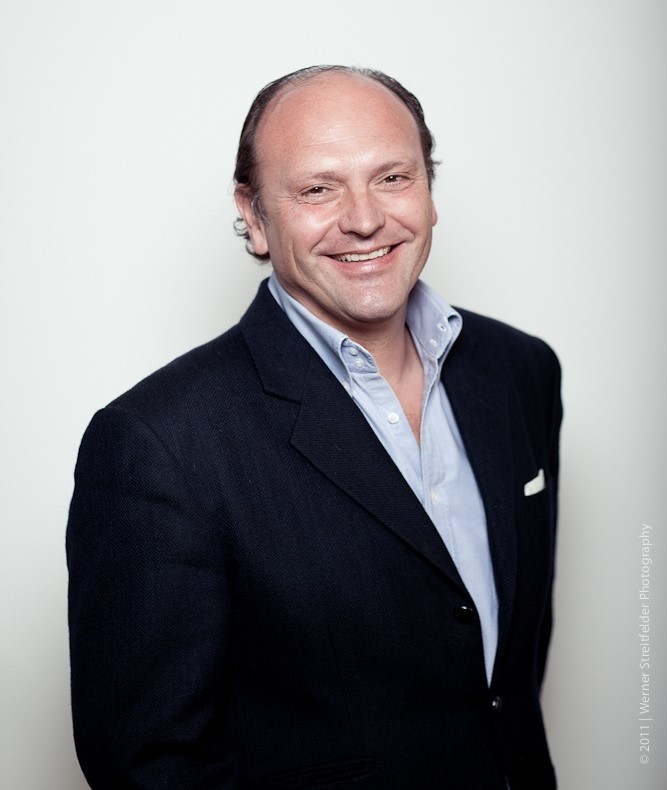
“Our only real competitive advantage is our brains and creativity,” says Harald Hartung, former Head of Unit for Research on Culture, Creativity and Innovation at the European Commission and author of “Unleashing the potential of the cultural and creative industries”
The Economic Impact of Cultural and Creative Industries
CCIs contribute more to Europe’s GDP than many realise more than automotive production in some countries and more than agriculture in others. Their real power, however, lies in their spillover effects.
Gaming technologies strengthen virtual training for pilots, fashion drives material innovation, and architecture shapes climate adaptation.
“In saturated global markets, it’s no longer the classical good that makes the difference it’s the story behind it,” says Harald Hartung.
Spillover Effects Across Sectors
Apple is often seen as the epitome of American tech dominance.
“Apple married culture and art with technology from the start. That is why their products sell for triple the price of competitors.”
Europe may lack a single Apple-scale success story, but it has something else: a vast and diverse cultural and creative industries ecosystem if only it were used strategically.
Finland’s gaming sector illustrates this clearly, with hundreds of micro-studios whose expertise spills into VR, AR, training simulations and industrial innovation.
The music industry offers another example: in some years, up to 50% of US chart hits were composed or produced by Swedes the result of long-term investment in education, community programmes and structured talent development.
The Right Actors at the Right Time
Europe faces extreme pressures: climate change, defence, geopolitics and demographic shifts.
“Everybody is calling for money,” says Harald Hartung. “But the challenge is not the amount it’s making it available to the right actors at the right time.”
Those actors are often found in culture: artists translating the climate crisis into lived experience, designers reinventing sustainability, technologists preserving heritage and architects designing for resilience.
“Art helps us understand complexity. It connects disciplines that otherwise stay locked in their silos.”
Funding Gaps and Structural Barriers
Europe allocates significant resources to CCIs but in a fragmented and opaque way.
“The landscape of funding is so scattered that even experts get lost. If I can’t get a full overview, how can a small company?”
The problem is not a lack of money, but access. CCIs are still excluded from many national allocations of EU structural funds, particularly smart specialisation strategies.
“My plea is to open structural funds to the CCIs. They are SMEs, they drive spillover, and they generate growth.”
From Fragmentation to Ecosystems
“We have many dots good dots but no framework to connect them. We don’t need new bureaucracies. We need an ecosystem.”
Harald Hartung highlights ekip as a crucial building block in creating that ecosystem a bottom-up platform connecting cities, practitioners, researchers, intermediaries and policymakers.
“In my view, ekip is laying the cornerstones developing policy, testing ideas, and making them public.”
ekip operates more like a laboratory than a committee room, offering policymakers grounded evidence of how creativity transforms cities, industries and social systems in practice.
Creativity as an Investment in Europe’s Future
“Supporting the creative economy is not a cost it is an investment in Europe’s future competitiveness.”
According to Harald Hartung, Europe needs:
- A political decision to treat CCIs as a strategic sector
- A shared ecosystem linking EU, national and regional innovation actors
- Joint programmes across policy domains, not siloed initiatives
- Long-term structures instead of short-term, project-based funding
Harald Hartung participated in the Round Table on Innovation Policies for the Cultural and Creative Sectors and Industries, hosted by ekip and Riksteatern.
Latest ekip News and Updates

July 13, 2026
By Bodil Malmström
Designing Materials for a Regenerative Future
From fungal textiles to living artefacts, researchers and designers are turning to deep tech to rethink what materials can do and who they are for....
July 10, 2026
By Katerina Kalimera
A model that works: what the ekip Academy showed about building innovation ecosystems
There is a particular kind of problem that no single organisation alone can solve, no matter how capable. ...

July 2, 2026
By Mats Benner
Building innovation ecosystems – the case for intermediaries
Recent EU policy debates—captured in the Letta and Draghi reports—have sharpened a familiar concern: Europe needs to better orchestrate its innovation resources. The ambition is clear. ...
July 2, 2026
By Lena Holmberg
Creatives Are in Europe’s Strategies. Now Comes the Hard Part.
Cultural and creative industries are finally visible in national strategies across Europe....
