


AI as a Creative Tool Sparks Human-Centered Innovation
By Bodil Malmström

Taking charge of AI development in the creative industries
How can we take charge of AI development and ensure that humans remain at the center of innovation? This was the key question explored during ekip’s two-day workshop in Lund, Sweden, which brought together multistakeholders from across the Cultural and Creative Industries (CCIs).
Participants worked across three portfolios Archaeology & Immersive Tech, Fashion Transformation, and Digital Live Experiences demonstrating how AI can empower creativity rather than overshadow human capabilities.
“It’s amazing to see how much progress three CCI portfolios can make in just a few hours with the right environment,” says Charlotte Lorentz Hjorth. “This challenges and strengthens our innovation ecosystem.”
Empathetic AI and human-centered innovation
The rapid advancement of generative AI presents both opportunities and challenges, especially for design, entrepreneurship, and creative practices. A core concept discussed during the workshop was empathetic AI technology designed to remain in harmony with human emotions, senses, and values.
“Instead of worrying about AI, we decided to take charge,” explains Birgitta Persson from Future by Lund.
“By working together across universities, companies, and public organisations, we can explore how AI and immersive technologies like VR and AR can support human creation and cultural participation.”
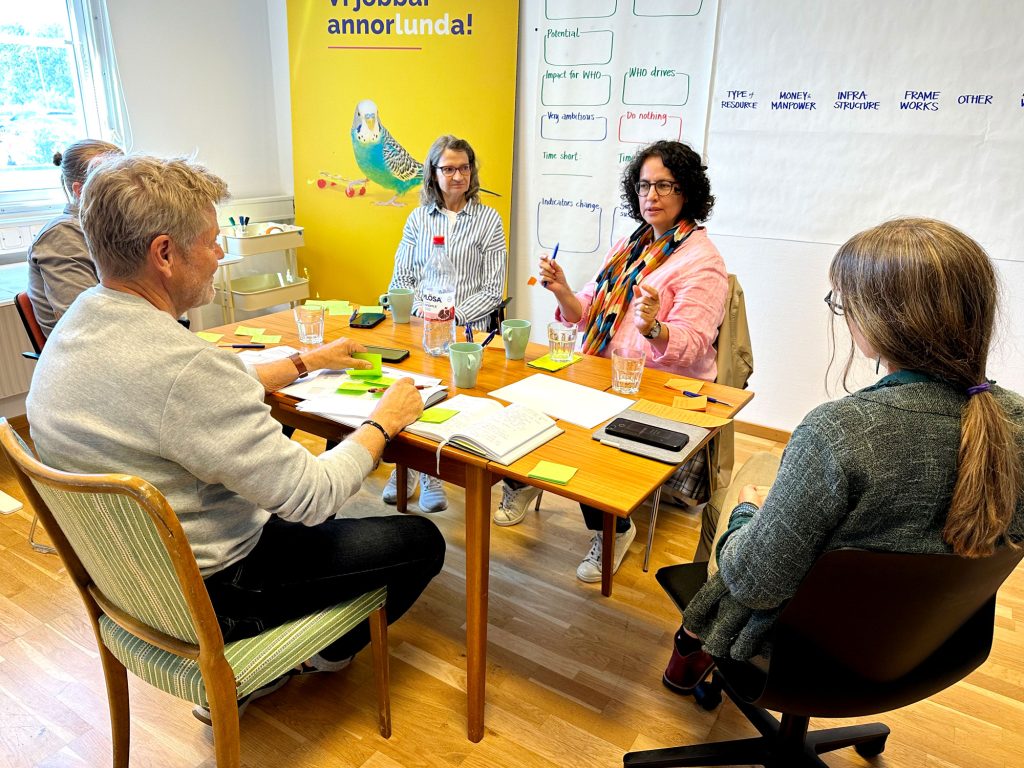
Copyright: Caroline Wendt
AI as a tool for storytelling and cultural heritage
Within the Archaeology & Immersive Tech portfolio, participants explored how AI can support the digitisation of archaeological excavations and enable new forms of storytelling.
“To create tools that help us tell stories, we must build on qualitative, research-based data,” says Charlotte Lorentz Hjorth.
AI can act as an enabler, but it must not replace real data with fabricated or synthetic material.
Paola Derudas from the Digital Archaeology DARK Lab at Lund University highlighted how AI can assist archaeologists by filtering relevant data and even support game developers in using archaeology as a creative environment.
Digital concerts and personalized cultural experiences
The Digital Live Experiences portfolio explored how AI already enables personalised digital concert experiences from selecting sound perspectives and camera angles to choosing a virtual seat in the venue.
“This shows that AI, when used as a creative tool, can truly drive human-centered innovation,” says Birgitta Persson.
These developments point toward new ways for audiences to engage with culture from home, while still preserving artistic integrity.
AI as a support structure for societal transformation
In the Fashion & Textile Transformation portfolio, AI was discussed as a broader support structure for societal change. While AI is already used to optimise manufacturing and logistics, participants focused on how to ensure AI remains intelligent and humane.
“We talked about creating the platform IUAI Intelligent Use of AI,” explains Despina Christoforidou from Lund University.
“How can we shape AI so it becomes a useful tool, rather than something we fear?”
The discussion highlighted the need for educators who understand both AI and their own disciplines, ensuring that creators are not merely passive consumers of opaque algorithms.
Skills, education, and the future of collaboration
The workshop also raised broader reflections on talent development, education, and the role of incubators and innovation hubs operating across disciplines.
“It takes time before new technology becomes normal behaviour,” notes Jesper Larsson from Malmö Opera.
“When that shift happens, knowledge can be embedded into education and training.”
Participants agreed that thriving in an AI-driven world requires investment in future skills, cross-sector collaboration, and accessible AI education not only for experts, but for the wider public.
“More people need opportunities to learn about AI so it doesn’t feel uncomfortable,” summarizes Katarina Scott from Future by Lund.
What comes next
The workshop had two main objectives: to examine the impact of AI on CCIs and to further develop ekip’s innovation portfolios. This work will continue and feed into upcoming activities, including the international forum Unexpected, to be held in Lund in June 2025.
By positioning AI as a creative partner rather than a replacement, ekip aims to shape a future where technology strengthens not diminishes human creativity.


Latest ekip News and Updates

October 1, 2026
Europe has the pieces. In Eindhoven, ekip shows how to connect them.
On 23 October, during Dutch Design Week, three years of European work on the cultural and creative industries changes hands ...
September 17, 2026
By Michalis Stangos
Four things Europe needs to get right on the creative industries, and one that is still missing
Europe is losing the technology race, but it still leads on creativity. China used to recruit European engineers. ...
September 3, 2026
By Lena Holmberg, Lund University
AI and CCI: Shaping Europe’s Next Step
Across Europe, cultural and creative actors are asking a similar question: how can artificial intelligence be shaped in ways that strengthen creativity, cultural diversity and democratic innovation, r...
July 16, 2026
By Katerina Kalimera
Translators, mediators, connectors: the missing infrastructure of innovation
At the ekip Academy in Tallinn, the South of Scotland team described themselves as the “glue” forming sectors and enabling collaboration, a basic idea that stayed with attendees throughout the event....
