


Traditions as tools for innovation
By Bodil Malmström

What is crafts-led innovation?
Crafts-led innovation uses traditional craft skills such as weaving, pottery, wood carving, leatherwork, or glassblowing to inspire new ideas, products, and services. These time-honored techniques are not only about preserving heritage, but also about addressing contemporary sustainability, production, and innovation challenges.
ekip’s main findings on crafts-led innovation
Based on insights from the Policy Lab, Community Review Workshop, and background research, ekip identified several key priorities to support crafts-led innovation across Europe:
- Establish a unified, cross-domain EU strategy adaptable to national and regional contexts, recognizing crafts’ economic, cultural, and social value beyond heritage.
- Expand lifelong learning and training for craftspeople, including innovation skills, digital competences, sustainability, financial literacy, and business management.
- Strengthen networks and infrastructures through creative hubs, advocacy groups, and local organizations supporting crafts-led innovation.
- Develop inclusive and accessible funding schemes and sustainable financial models that fairly remunerate craftspeople.
- Adapt regulatory frameworks to balance preservation with innovation, allowing traditional techniques to evolve while safeguarding core values.
Open innovation as a pathway for flexible learning
Open innovation spaces are built on mutual respect, curiosity, and shared learning across disciplines.
“Still, what often takes place in such an environment is not more extraordinary than exchange of experience and viewpoints and joint learning,” says Elisa Kraatari, researcher at Humak UAS and partner of ekip.
Craft-based methods can act as powerful learning tools in interdisciplinary settings, as humans naturally think through making, materiality, and hands-on experimentation. For many, engaging with haptics and materials leads to unexpected insights and new ways of thinking.
Learning through making: crafts as innovation enablers
From an andragogic perspective, open innovation is fundamentally about learning not only new skills, but learning with and from others.
“Open innovation is an opportunity to access increased innovation capacity through shared learning,” Elisa Kraatari explains.
Respectful curiosity toward others’ skills and knowledge lies at the core of meaningful collaboration, whether between craftspeople, creatives, technologists, or engineers.
Strengthening infrastructures for crafts-led innovation
Creative hubs, cultural ecosystems, and public spaces play a vital role in connecting culture, society, technology, and the economy.
“Where people live, there will be culture,” says Martijn van der Mark, policy advisor at the cultural department of the City of Rotterdam.
Cultural activities such as festivals, debates, exhibitions, and hybrid digital-physical spaces act as catalysts for open innovation by bringing diverse actors together and amplifying public engagement.
Inclusive funding and innovation procurement
Policy tools already exist to support crafts-led innovation but are often underused.
Drawing parallels with food procurement and sustainability policies, the article highlights how innovation procurement could be adapted to support crafts and cultural industries through long-term, value-driven investment rather than short-term cost efficiency.
“Thousands of years of craft knowledge can shape a sustainable future,” notes Katarina Scott, Senior Project Development at Future by Lund.
Balancing preservation and innovation through regulation
Regulatory frameworks can protect and promote regional craftsmanship while enabling innovation.
Examples from food regulation such as geographic indication protections offer inspiration for crafts. Tools like Digital Product Passports (DPP) and blockchain could verify authenticity while supporting sustainability and market value.
“We’ve done it with food why not with craft?” asks Charlotte Lorentz Hjorth, coordinator of ekip.
Latest ekip News and Updates
October 1, 2026
Europe has the pieces. In Eindhoven, ekip shows how to connect them.
On 23 October, during Dutch Design Week, three years of European work on the cultural and creative industries changes hands ...
September 17, 2026
By Michalis Stangos
Four things Europe needs to get right on the creative industries, and one that is still missing
Europe is losing the technology race, but it still leads on creativity. China used to recruit European engineers. ...
September 3, 2026
By Lena Holmberg, Lund University
AI and CCI: Shaping Europe’s Next Step
Across Europe, cultural and creative actors are asking a similar question: how can artificial intelligence be shaped in ways that strengthen creativity, cultural diversity and democratic innovation, r...
July 16, 2026
By Katerina Kalimera
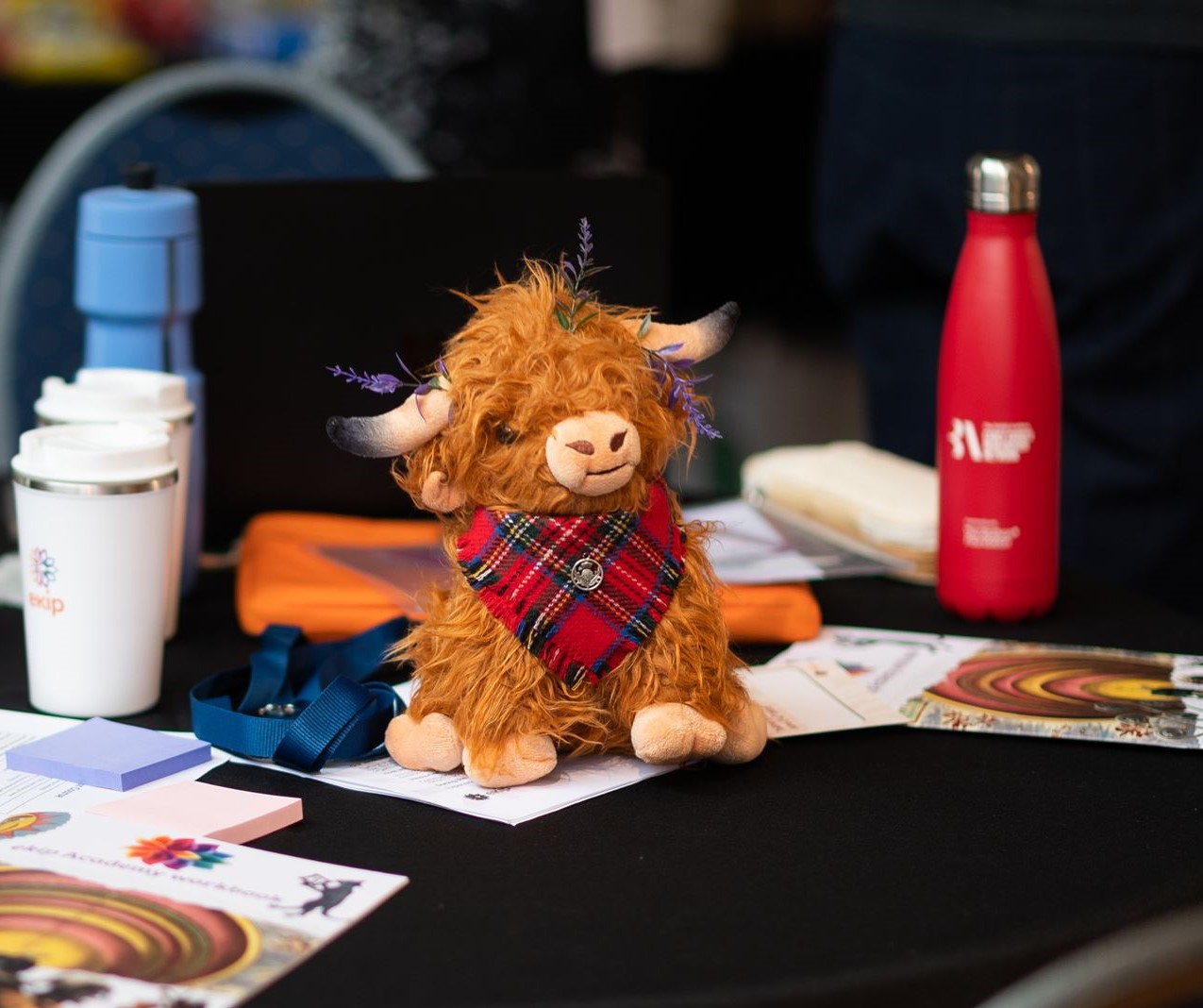
Translators, mediators, connectors: the missing infrastructure of innovation
At the ekip Academy in Tallinn, the South of Scotland team described themselves as the “glue” forming sectors and enabling collaboration, a basic idea that stayed with attendees throughout the event....
