
Welcome to the new innovation policy platform for the cultural and creative industries

- POLICY AREAS
 AI and Cultural and Creative Industries
 New European Bauhaus – CCIs enabling green transition
 Immersive Media
 Crafts-led Innovation
 Platformisation of the Music Industry
 Inclusivity in Video Game Industry
 Cross-Innovation with Performing Arts
 Fashion Transition: Eco-Design for Circularity
 Cultural Heritage Institutions within Open Innovation Ecosystems
 New funding models for creativity and innovation
 Spaces, infrastructures, and ecosystems for CCIs
 From the Lab,News
“Today’s innovations are about creating meaning rather than functionality”
From the Lab,News
“Today’s innovations are about creating meaning rather than functionality”
“Today’s innovations are about creating meaning rather than functionality”
By Bodil Malmström
Performing art enter open innovation
Through the performing arts, complex research and new technologies can be turned into experiences people don’t just understand, but actually feel. Shaped by imagination, shared values and belief in the future, the space where art operates, intangible value increasingly determines what lasts.
What happens when performing art step into open innovation environments? The result is not simply new products or services, but new ways of thinking. Innovations shaped by meaning, emotion and human experience.

From the play “Those who never die” at Riksteatern, Sweden. Photo: Patrik Persson Illustration: Johanna Kallin
Susanna Dahlberg is CEO of Riksteatern with 230 local associations across Sweden. As the country’s largest producing touring theatre, it brings high-quality performing arts to audiences everywhere – from grand theatres to village halls and classrooms.
” Today’s innovations are about creating meaning rather than functionality or utility. Companies that can imbue their products or services with content and usability that feels meaningful to users are the ones that survive the competition.”
Creating meaningful interactions is what performing arts do every day.
” In encounters with audiences and in open formats like co-creation, prototype demonstrations and test beds, new ways of listening, learning and iterating towards relevance, meaning and sustainability emerge.”

Susanna Dahlberg, CEO Riksteatern Sweden,
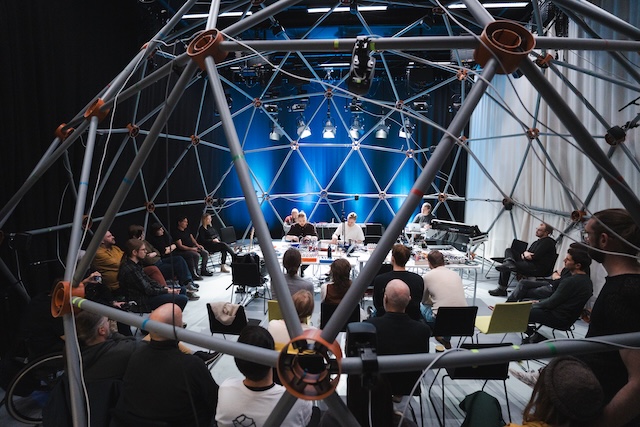
took part at the PolicyLab on cross innovation
with performing art. Photo: Sören Vilks
Translate complexity
The intangible value is many times higher than the material value of a product and is based on faith in the future, human imagination, norms and values the very terrain of art, Susanna Dahlberg stresses.
Performing arts can help translating complex research and emerging technologies into experiences people can feel as well as grasp. Through storytelling, music, movement and visual language, abstract ideas gain emotional resonance activating empathy, sharpening understanding, and making knowledge linger long after the curtain falls.
Neuroscience studies show that art experiences trigger the brain’s reward system and empathic processes, making them powerful tools for learning.
”And partly by simply portraying complexity performing arts can retain the depth and ambiguity of research more easily than perhaps journalism or popular science, while making research tangible through body, voice and space”, says Susanna Dahlberg.
Clear, shared goals
Susanna Dahlberg argues that if the performing arts are to thrive within open innovation ecosystems, the conditions must be right. Clear, shared goals are essential along with incentives that align business models and intellectual property in ways that generate value not just for companies, but for artists, cultural institutions and public actors alike.
” A collaboration based on curiosity, playfulness and mutual respect for different skills and abilities has a greater chance of success. There is also a need for a policy dialogue that creates a stable and long-term playing field for collaboration and has legitimacy based on the value that art creates for society rather than purely commercial benefits.”
Closing the gap
Intermediary organizations from innovation labs to cultural bridge builders play a crucial role in closing the gap between the arts and other sectors, translating between different logics and enabling collaborations that might otherwise never take shape.
“Artistic processes and technical or business logic are radically different,” Susanna Dahlberg stresses. Intermediary actors act as interpreters between these worlds, translating artistic needs into the language of innovation and innovation back into art.”
Without these actors, artistic initiatives risk remaining at the project stage and lacking political support. A neutral arena where artists, businesses, academia and public actors meet facilitates and stimulates collaboration.
The power of art
Looking ahead, what role do you see the performing arts playing in our society over the next decade?
” Interest in performing arts is growing among the Swedish population, and many audience members attest to this, saying that art gives them powerful experiences that stir their emotions and thoughts and allow them to process these together with others an experience of meaning and relevance.”
The risk is that, without art, the future begins to look dystopian.
” A tech-driven future where art is not given the mandate or power to be at the forefront would result in dystopias such as Blade Runner, Terminator or worlds described by cyberpunk author William Gibson. Performing arts will help us avoid falling into these traps.
Growing beneath the surface
In southern Sweden, innovation shaped by the performing arts is unfolding quietly through lived experience, experimentation and emotional engagement, far beyond the usual cultural arenas.
” The clearest examples are found in dramatized audio walks and augmented reality experiences now used in education, tourism and place-making.” says Anna Lyrevik Head of Culture Administration, Region Skåne in the south of Sweden, focusing on cross-sector collaboration, innovation and the role of arts and culture in regional development.
Elsewhere, the impact is more subtle but no less significant. Anna Lyrevik points to hospital clown programs, now also being tested in palliative care. Professional actors are also used in medical training, helping doctors rehearse difficult patient encounters, while staged scenarios are employed to explore democratic capacity and individual responses to complex social situations.
“So far, it has largely been about using the effects of dramatized experience,” she says, whether to test ideas, deepen understanding or support health and wellbeing.

Anna Lyrevik, Region Skåne Swedenattended
ekip´s Policy Lab in Lund, Sweden.
Obstacles persist
Cross-sector collaborations, Anna Lyrevik believes, can strengthen inclusion and civic participation by allowing people to experience complexity rather than abstract it. But significant barriers remain.
Time, networks and competence are the main constraints for performing arts organizations, Anna Lyrevik notes, compounded by funding systems that remain tightly siloed.
“ Support structures today are not sufficiently open or adapted for this kind of cross-development. Intermediary actors innovation labs or cultural bridge-builders therefore become crucial, particularly in early phases. “They are probably very important at the start, before ordinary systems and structures are ready.”
At the same time, she warns against excessive bureaucracy.
“Resources need to be focused on doing, not administration or too much superstructure. We need to build ways of working where this becomes simple, part of business as usual.”
Looking ahead, Anna Lyrevik sees significant potential for the performing arts to drive societal innovation over the next decade, if conditions allow.
“ The roles will be defined by the practitioners themselves, not by us bureaucrats,” she says. “Our job is to create the foundations that make it possible.”
Latest ekip News and Updates
May 20, 2026
By Bodil Malmström
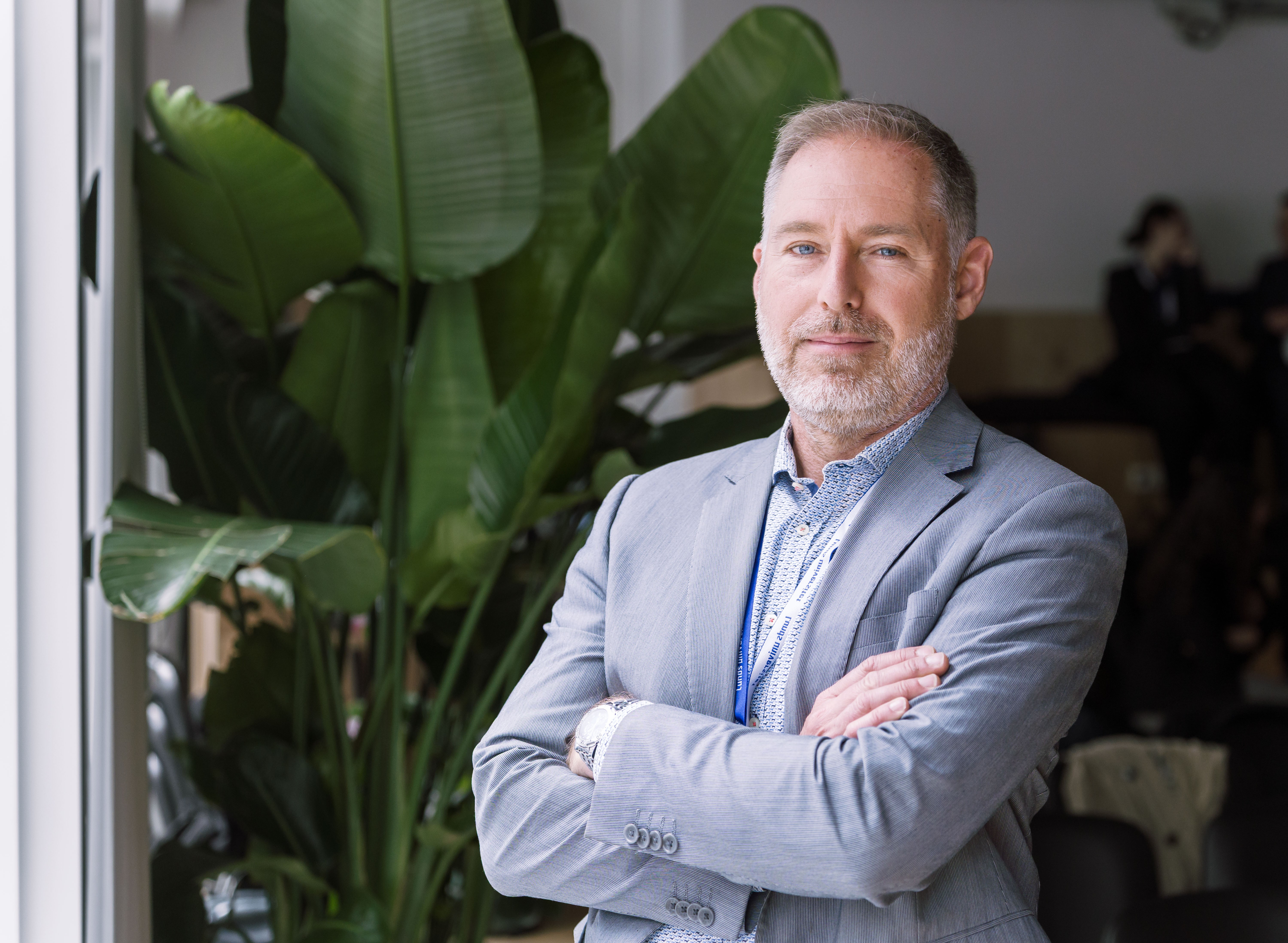
Where Art Meets Algorithms: New Frontiers in Deep Tech and the Creative Industries
As Europe accelerates its push into deep tech, Finland is emerging as a driving force in connecting it with the Cultural and Creative Industries. ...
May 20, 2026
By Bodil Malmström
ekip: a project that became a journey
From early ideas to European influence, Rickard Bucksch, ekip’s former Policy Officer at the European Commission’s DG Research and Innovation, reflects on a journey shaped by collaboration, experiment...
April 16, 2026
By Bodil Malmström
From Fabric to Future: How DPP is Transforming European Fashion
The transition toward a circular and sustainable fashion industry is gaining momentum across Europe, driven by both environmental urgency and evolving policy frameworks. ...

April 15, 2026
By Bodil Malmström
Creatives overlooked in national innovation strategies
From design studios to gaming startups, Europe’s cultural and creative industries are widely recognised as engines of growth. Yet behind the consensus lies a fragmented policy landscape that risks hol...
