
Welcome to the new innovation policy platform for the cultural and creative industries

- POLICY AREAS
 AI and Cultural and Creative Industries
 New European Bauhaus – CCIs enabling green transition
 Immersive Media
 Crafts-led Innovation
 Platformisation of the Music Industry
 Inclusivity in Video Game Industry
 Cross-Innovation with Performing Arts
 Fashion Transition: Eco-Design for Circularity
 Cultural Heritage Institutions within Open Innovation Ecosystems
 New funding models for creativity and innovation
 Spaces, infrastructures, and ecosystems for CCIs
 Reimagining Deep-Tech
 Digital Commons
 News,Policy Spotlights
Europe’s Creative Innovation Gap: Why Cities Are Turning to ekip
News,Policy Spotlights
Europe’s Creative Innovation Gap: Why Cities Are Turning to ekip
Europe’s Creative Innovation Gap: Why Cities Are Turning to ekip
By Bodil Malmström
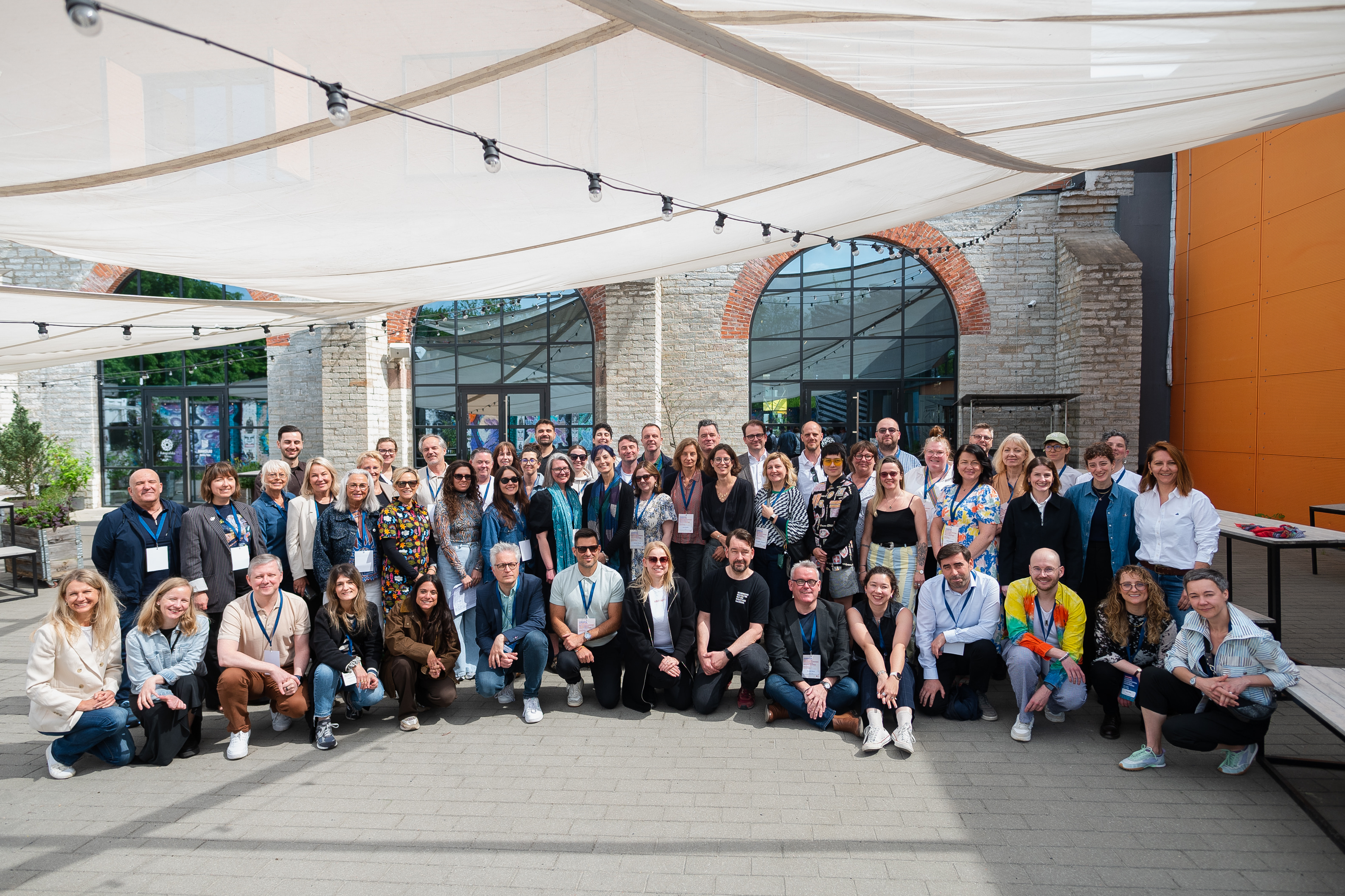
From Stockholm to southern Italy, a growing number of cities are seeking answers to the same question: how do you actually build innovation systems for the Cultural and Creative Industries? The surge of interest in ekip suggests that Europe may finally be ready to move from ambition to action.
Interest in policy prototyping at the city level is rapidly gaining momentum. Following the ekip Academy, where just 14 ecosystems were selected to participate, demand has far exceeded available places leaving a waiting list. A waiting list that also applies to ekip´s city prototyping. All together nearly 50 local ecosystems are eager to take part. These cities are actively seeking new ways to test policies in practice and strengthen innovation within their cultural and creative sectors.
The surge in applications signals a strong and growing appetite among urban stakeholders to move from policy discussion to hands-on experimentation.
This is not a coincidence. It is a signal.
“There has been a need out there for a long time,” says Charlotte Lorentz Hjorth. “But it hasn’t really had a cohesive force before. Now we’re starting to see what happens when that need meets something concrete.”
What´s needed to make it work
ekip´s city prototyping comes from a hands-on policy prototyping exercise in a local city context. After ekip´s exploring a policy area and its link to Cultural and Creative Industries (CCIs), the ekip research team asks: what would this look like in practice?
Together with local stakeholders, early policy ideas are tested to see how they might support innovation. Using Portfolio Sensemaking, participants map out an innovation portfolio, spot strengths and gaps in the local system, and identify what’s needed to make it work.
In short, prototyping helps turn policy ideas into practical, place-based actions.
From Lone Pioneers to Systemic Thinking
For years, innovation in the cultural and creative industries has been driven by individuals rather than systems. A policymaker here, an incubator there, a cultural cluster somewhere else. Efforts have emerged, but often in isolation.
“You have maybe one or two people in a city working with these questions,” says Lorentz Hjorth. “They are quite alone. And then it’s far to the next person doing something similar.”
While some regions have developed cultural quarters or creative hubs, far fewer have managed to connect these to structured innovation support—incubators, labs, investment logic, and policy frameworks working together.
The result is a fragmented landscape where the will to innovate exists, but the pathways remain unclear.
“Everyone wants to work with innovation in this sector,” she explains. “But very few have grasped how to do it.”
What ekip brings: structure to complexity
ekip’s role has been to make the intangible tangible. Not by simplifying the challenge, but by structuring it.
Rather than offering a single model, ekip provides a way of navigating complexity, through policy journeys, shared frameworks, and tested approaches developed together with cities.
“It’s not one solution,” Lorentz Hjorth emphasizes. “These are complex questions. But we try to make it logical, how to understand the different dimensions, the building blocks, and how they come together.”
For policymakers, this is crucial. Making the case for investment in creative innovation often requires bridging cultural, economic, and political arguments—something that can be overwhelming for individuals working alone.
“If you have to gather all the evidence yourself, it can be almost overpowering,” she says.“ We help create that logic, those arguments, that shared understanding so you can move forward.”
An Ecosystem of Ecosystems
At its core, ekip operates as what it calls an “ecosystem of ecosystems”, a network that connects cities, professionals, and institutions working on similar challenges.
This is not just about knowledge sharing. It is about building capacity across Europe.
“You might be the only expert in your ecosystem,” says Lorentz Hjorth. “But there are others out there. And when you connect them, you create a professional network that didn’t exist before.”
Through ekip´s Academy and city prototyping, ekip brings together policymakers, cultural actors, and innovation stakeholders, encouraging them to work across silos and develop shared strategies.
The impact is both practical and psychological: participants move from isolation to collective momentum.
Why Now?
The timing is not accidental. Across Europe, cultural and creative industries are increasingly recognized for their economic and societal value. Yet policy frameworks have lagged behind.
“There has been a lot of intention,” Lorentz Hjorth notes. “But not the tools, not the methods, not the examples of how to do it in practice.”
ekip arrives at a moment when that gap is becoming untenable. Cities are under pressure to innovate, diversify their economies, and support sustainable growth. The creative sector is part of that equation but only if it can be integrated into broader innovation systems.
From Policy to Practice
One of ekip’s defining features is its dual approach: working both top-down and bottom-up. Policy recommendations are not only developed, they are tested and refined in real contexts.
“Normally, policy work takes years before it’s implemented,” says Lorentz Hjorth. “We’ve tried to build it together with ecosystems at the same time.”
City prototyping focuses on specific innovation challenges, while the Academy builds broader understanding and alignment. Together, they create a pathway from strategy to action.
A Catalyst for Europe’s Creative Future
As interest continues to grow, ekip faces its own challenge: scaling its work beyond current resources. But the momentum is undeniable.
The ecosystems now seeking to engage are not just participants—they are potential multipliers. If they begin to apply and adapt ekip’s frameworks, the effects could ripple across the continent.
“If you build capacity in these ecosystems,” Lorentz Hjorth says, “it should lead to a stronger, more systematic power for innovation in the sector.”
In that sense, ekip is a knowledge platform and a catalyst helping Europe’s cultural and creative industries move from scattered initiatives to coordinated, strategic innovation.
About ekip Academy
The ekip Academy was a four-day intensive training program in Tallinn for policy teams designing innovation strategies that integrate cultural and creative industries into collaborations across sectors. Eco systems from cities around Europe worked together on a shared mission. Whether developing a research agenda, city transformation strategy, or new innovation instrument, the teams left with practical tools, actionable strategies, and connections to a Europe-wide network of innovation professionals.
About City prototyping
Once the ekip research team has explored a policy area and its connection to cultural and creative industries (CCIs) and innovation, we ask: what would this mean in a local city context?
Together with local stakeholders, we test how a draft policy recommendation might stimulate innovation. Using Portfolio Sensemaking, stakeholders simulate an innovation portfolio, analyse the strengths and gaps of the local support system, and identify what resources are needed to realise the portfolio.
Latest ekip News and Updates

July 16, 2026
By Katerina Kalimera
Translators, mediators, connectors: the missing infrastructure of innovation
At the ekip Academy in Tallinn, the South of Scotland team described themselves as the “glue” forming sectors and enabling collaboration, a basic idea that stayed with attendees throughout the event....

July 13, 2026
By Bodil Malmström
Designing Materials for a Regenerative Future
From fungal textiles to living artefacts, researchers and designers are turning to deep tech to rethink what materials can do and who they are for....
July 10, 2026
By Katerina Kalimera
A model that works: what the ekip Academy showed about building innovation ecosystems
There is a particular kind of problem that no single organisation alone can solve, no matter how capable. ...

July 2, 2026
By Mats Benner
Building innovation ecosystems – the case for intermediaries
Recent EU policy debates—captured in the Letta and Draghi reports—have sharpened a familiar concern: Europe needs to better orchestrate its innovation resources. The ambition is clear. ...
