


DPP could be the spark for a more responsible market
By Bodil Malmström
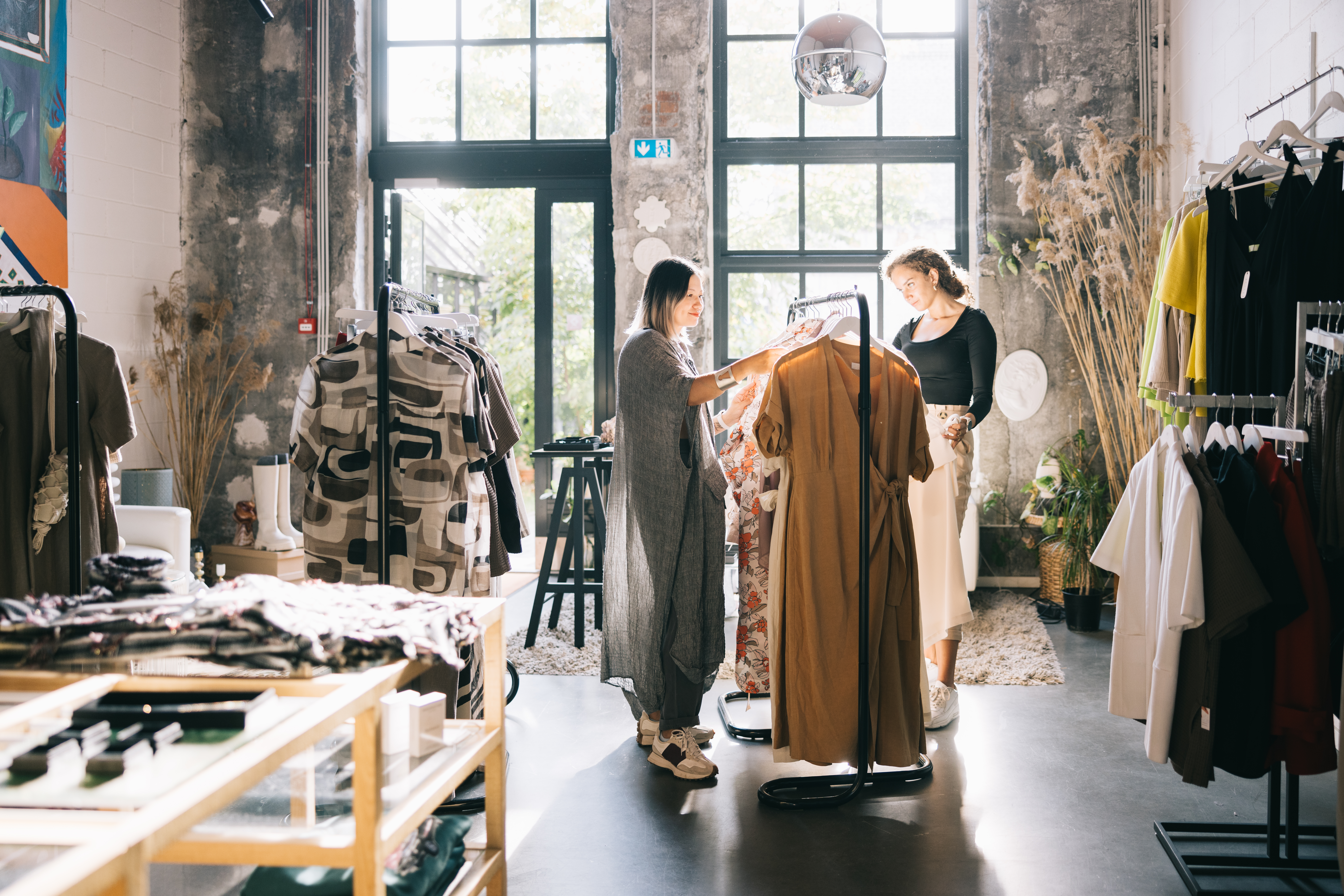
The fashion and textiles ecosystem, one of 14 strategic sectors in the EU’s Industrial Strategy, sits at the heart of Europe’s push toward green and digital transformation. At ekip´s Policy Lab in Milano the discussion focused on the Digital Product Passport (DPP) the EU’s plan to tag products with traceability data from fiber to recycling.
The fashion and textile industries future depends on an ecosystem-wide approach one that weaves together regional industries into a cohesive and responsible market.
Mariagrazia Berardi, project manager at CNA Lombardy working within the Enterprise Europe Network to support small and medium-sized enterprises (SMEs), participated at ekip´s Policy Lab in Milano.
“I spent a decade in textile production,” Mariagrazia Berardi says. “Now I help Italian SMEs with an ethical vocation companies that care about social as well as environmental sustainability.”
She came to the lab with a warning.
“The strategy says, make fast fashion out of fashion and I agree. But if rules treat every company the same, you penalize SMEs. Ninety-nine percent of European firms in this industry are small.”
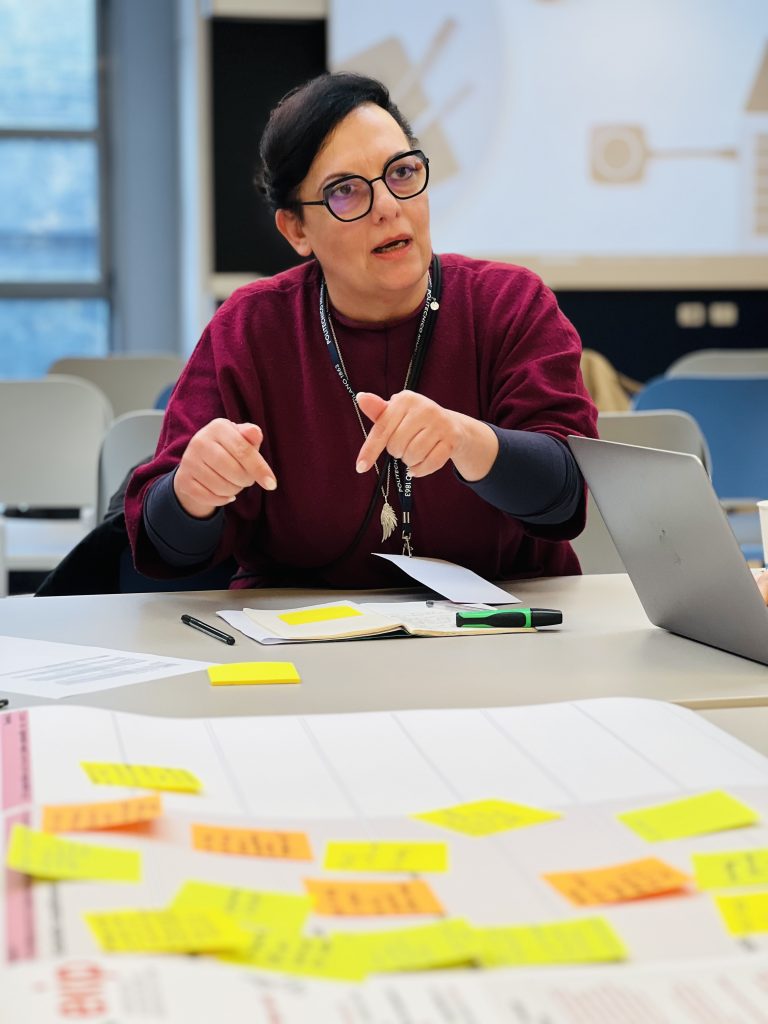
Mariagrazia Berardi took part at the Policy Lab in Milano
Transparency engine
The DPP could reveal where and how a garment was made, how to repair it, and where to resell or recycle it. Done well, it’s a transparency engine and a trust builder. Done badly, it’s a compliance mill that tilts the field toward the biggest players.
“DPP might become another tool in the hands of big companies, unless we design an adoption that fits different realities.”
Her proposal isn’t to exempt SMEs but the opposite.
“If small brands aren’t obliged to adopt DPP, they’ll be pushed out of the market. How else can they prove they’re more sustainable than a fast-fashion giant? Oblige everyone, but create two tracks: one for large companies; another that cuts bureaucracy and finances SME adoption.”
That duality runs through the day’s debates. On enforcement, she’s blunt:
“We need auditors European or national and far stricter customs. Today, goods enter with labels no one properly checks.”
Quality extremely important
The goods that are going on the EU market should be durable Mariagrazia Berardi emphasizes. And in order to be durable, they have to be made with high quality even recycled materials must meet this standard.
“The eco-design quality is important, let’s pay extremely careful attention to how things are made.”
She remembers when she was at primary school, she was taught to take care of the environment and nature.
”Family played an important role, but teachers often formed the backbone of that early education. It was a question of culture.”
Over time we lost the culture of the 1960s the post Second World War culture. It was a culture grounded in inclusivity, reuse, and respect for materials. Clothing offers a clear example.
“I still remember my mum taught me to understand the quality of a garment, because she was taught by her parents. If it is of good quality, we buy it. If it is not, we don’t buy it.
On consumer trust, she argues for harmonized certifications. Multiple labels just muddy the waters the message needs to be clear and credible. And for consumers, the call is both simple and radical: choose longevity. In a sector chasing constant renewal, the future hinges on one principle.
“Durable goods must become the norm even recycled materials must last.”
Work as an ecosystem
Mariagrazia Berardi believes that clear, credible communication is key to reshaping the fashion industry, from EU policy down to local campaigns, borrowing from familiar models such as food labelling.
“Campaigns exist, but we must invest, and even consider rewards for consumers at the beginning.”
There’s also a skills fusion to orchestrate.
“We need innovative engineering and innovative design together,” Mariagrazia Berardi says. “New hybrid roles co-design managers and support from trade associations. We need to work as an ecosystem or we won’t change the industry.”
A complex landscape
Is a happy ending possible in a globalised market that imports vast volumes from outside Europe? She doesn’t sugarcoat it.
“The landscape is complex and there is no single solution. But SMEs cannot stand still. We have to adopt the DPP now it can be an opportunity.”
Her “desirable future” is clear: A just transition where European manufacturing SMEs find their place. Today, big brands impose the rules. With these new policies, SMEs should gain the position they deserve. Another possible future is that SMEs are crushed and disappear.
DPP could finally make that quality visible, searchable, provable. And for public authorities, the mandate is equally strong: fund the transition, simplify the path, police the borders, and help citizens make sense of the labels.
”We’ve already lost many in the past decade competition, bureaucracy, demographics. If we don’t act, the pressure will increase.”
DPP must be useful
Sara Ongaro, Sustainability Account Manager at Renoon, a tech firm building passport solutions for brands, also attended the Policy Lab. They started as a consumer platform for responsible fashion. To back up claims, the company built tools to collect sustainability data from brands. As the passport agenda crystallized, they moved fully B2B to provide the infrastructure brands need.
If the DPP is narrowly implemented, it risks being a bureaucratic burden. Ongaro argues it must be useful:
“We design passports for two layers. First, core compliance we’re waiting on some product-level specifics. Second, voluntary value: adding services that make the passport pay its way repairs and take-back, authenticity checks, customer engagement, even upselling. Done right, DPP becomes a new marketing channel.”
Unlocking new business models
That’s especially important for smaller brands.
“Our SME clients who lean in do it because they see DPP as a tool to engage customers and show the work in their supply chains,” she says. “Others are motivated by the data they can ethically collect to build loyalty. It’s two-way.”
Still, the hurdles are real and different by size.
“For big companies, data is everywhere: scattered across internal systems and suppliers. The challenge is technically integrating it into a single, trustworthy passport,” Sara Ongaro says. “For SMEs, there are two challenges: collecting data from scratch sometimes from small suppliers with no IT systems and meeting technical build requirements without in-house expertise.”
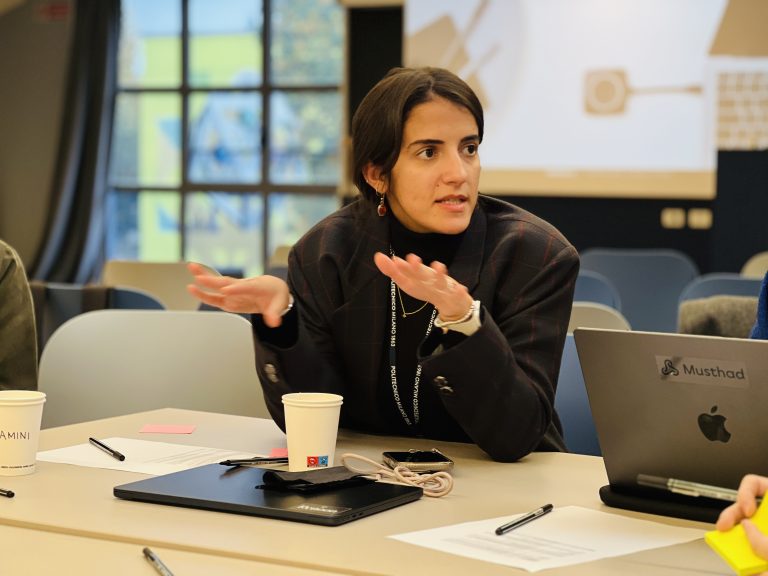
Sara Ongaro participated at the Policy Lab in Milano on DPP.
A visible supply chain
Her bottom line isn’t ambiguous.
“This is good legislation. It pushes companies that never measured anything to start measuring. Once you see the supply chain, you can make better choices environmental and social. But we must reduce friction for the smallest players and reward adoption with tangible benefits.”
In five to 10 years, she believes DPP will be unremarkable and transformative.
“We’ll be used to scanning a code and seeing how to repair, resell, or recycle. Brands will see the passport as a service hub, not a PDF of obligations.”
For now, the work is granular: chasing datasets, stitching systems, designing clear interfaces and credible claims. But if Europe succeeds, the payoff is cultural as much as technical.
“Make it useful, not just compliant,” Sara Ongaro insists. “That’s how the passport becomes the engine of a more responsible market for companies and for citizens.”
Latest ekip News and Updates
October 1, 2026
Europe has the pieces. In Eindhoven, ekip shows how to connect them.
On 23 October, during Dutch Design Week, three years of European work on the cultural and creative industries changes hands ...

September 17, 2026
By Michalis Stangos
Four things Europe needs to get right on the creative industries, and one that is still missing
Europe is losing the technology race, but it still leads on creativity. China used to recruit European engineers. ...

September 3, 2026
By Lena Holmberg, Lund University
AI and CCI: Shaping Europe’s Next Step
Across Europe, cultural and creative actors are asking a similar question: how can artificial intelligence be shaped in ways that strengthen creativity, cultural diversity and democratic innovation, r...
July 16, 2026
By Katerina Kalimera
Translators, mediators, connectors: the missing infrastructure of innovation
At the ekip Academy in Tallinn, the South of Scotland team described themselves as the “glue” forming sectors and enabling collaboration, a basic idea that stayed with attendees throughout the event....
