


ekip Events

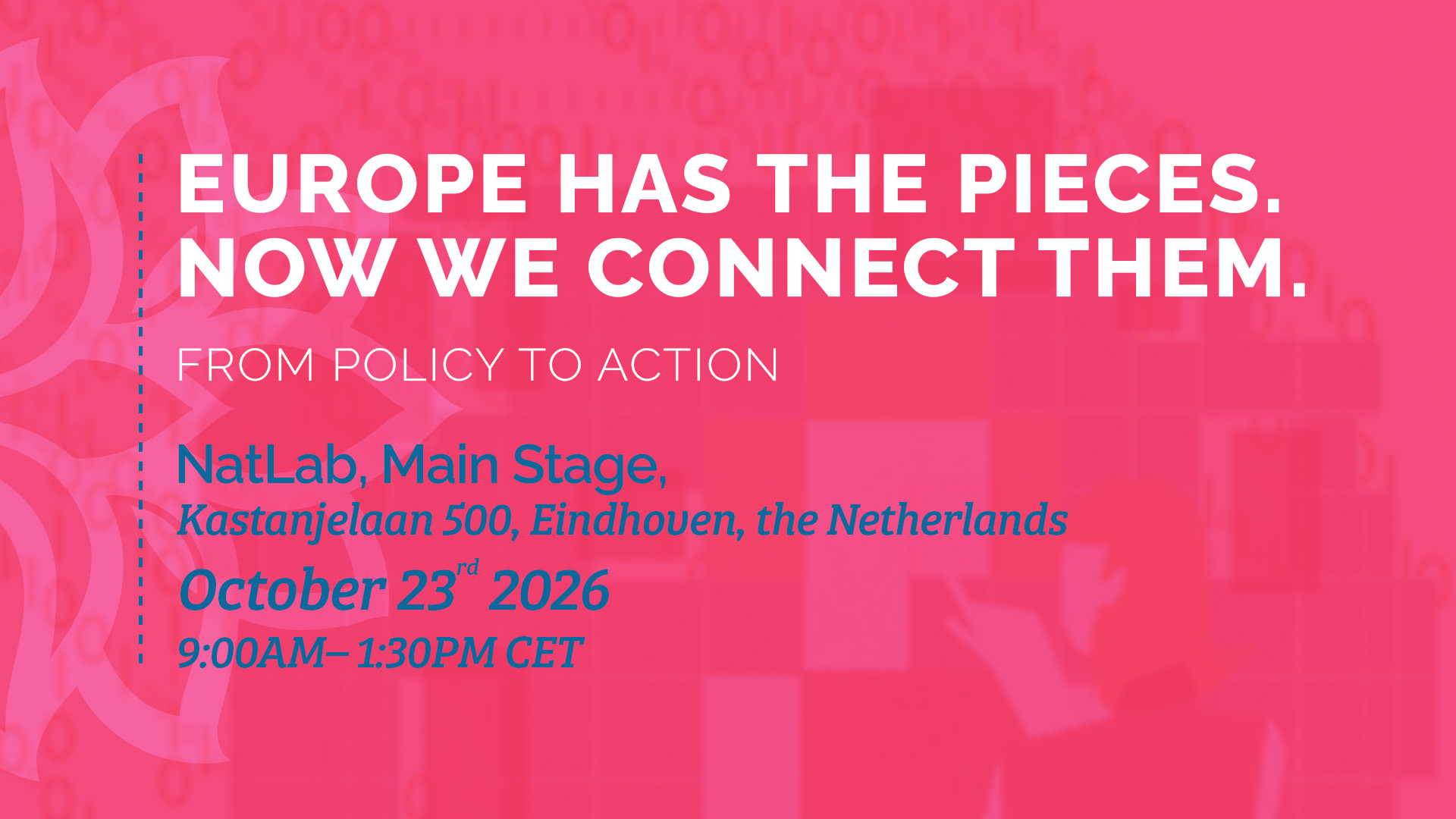
VENUE:
NatLab Main Stage, Kastanjelaan 500, 5616 LZ Eindhoven
TIME:
09:00 am – 13:30 pm
DESCRIPTION:
FROM POLICY TO ACTION
Europe has the pieces. Now we connect them.
Europe does not need another argument for why the cultural and creative industries matter. That argument has been won: the Culture Compass sets the direction, and in June the Council, the European Parliament and the European Commission signed a joint declaration committing the institutions to embedding culture across EU policies and funding tools. What Europe needs now is a way to put the creative and cultural industries to work inside its innovation ecosystems.
Over more than three years, ekip has moved from identifying policy barriers to investigating them with ecosystems, developing recommendations, testing methods and building tools that turn complexity into action. What the work revealed is larger than any single recommendation. Europe already holds most of the capabilities it needs, in creative talent, research, industry, cities and regions, institutions, infrastructure and knowledge. Those capabilities do not consistently work as a connected system.
In Brussels in May, ekip put forward five recommendations for embedding the cultural and creative industries structurally within European innovation policy. Since then the Academy, the cases, the interviews, the foresight work and the ecosystem activities have carried the conversation from what needs to change to how change happens. In October, those strands come together across Rotterdam, Delft and Eindhoven.
The morning of 23 October is the point at which the work changes hands. It is not a results presentation and not a project retrospective. It is a working session about how an innovation policy platform creates value and competitiveness for Europe, and about who carries each part of it forward. Cities, regions, governments, universities, sector organisations and creative businesses can take what has been built, adapt it to their own realities and use it in their own policy journeys.
The timing is useful. The legal texts and governance of the next generation of European programmes are still being written, and the terms on which the creative and cultural industries sit inside them are still being settled.
The day is organised together with Dutch Design Foundation during Dutch Design Week, which brings more than 2,500 designers and around 300,000 visitors to Eindhoven over nine days.
There are two separate registrations for this day. The morning session at NatLab Main Stage is registered through the button at the top of this page, and closes on 16 October at 16:00. The afternoon, CreativeNL Live with ClickNL from 16:00 to 19:30, is registered separately through this form. Those seats fill quickly, so book early if you want both.
WHO THE MORNING IS FOR
Five groups, each with a different reason to be in the room:
- European and national policy carriers, who can move recommendations into policy.
- Cities and regional ecosystem leaders, who can implement them locally.
- Sector representatives and intermediaries, who can mobilise their industries.
- Universities, research and innovation organisations, who can embed the methods and develop the knowledge.
- The ekip community, who built this and will continue it.
AGENDA
09:00 — Coffee and registration
09:30 — Welcome by ekip; Valentina Auricchio Politecnico di Milan, Read the ekip magazine
09:40 — Keynote Speaker: Barbara Koop, Head of Usability at Philips – Lead Design Studio Eindhoven and High Tech Campus Innovation Labs.
10:00 —Join us in the discussion on what Europe should do next to bring the Creatives into the core of innovation in Europe – taking policy and strategy into action. Moderator of the discussion with the audience, guests and the ekip partners: Ragnar Siil, Creativity Lab.
ekip partners pitching the 5 strategic recommendations by ekip:
- Michalis Stangos, MSCOMM – “Embed CCI structurally across EU programmes horizontally and vertically”
- Marcin Poprawski, HUMAK – “Break down silos and enhance cross-policy approach”
- Lena Holmberg, Lund University – “Redesign innovation ecosystems around Open Innovation, built for how CCIs actually work”
- Katarina Scott, Future by Lund – “Shift to innovation portfolio-based financing and investment, with intermediaries as orchestrators”
- Ragnar Siil, Creativity Lab – “Build a standing foresight engine to keep CCI innovation policy ahead of the curve”
Guests:
- Rosa Perez Monculus – Cultural policy and research at EC DG RTD – Democracy, Equality and Culture
- Thibaud Delpeut Strategic Policy Advisor City of Breda, Founder Innovation: Lab
10:45 — Panel #1 – ekip Moderator Charlotte Lorentz Hjorth Lund University, introduction to the panel – “Cross analysis of the innovation Building Blocks constituting a CCI Open Innovation ecosystem” – Carlo Vuijisteke IDEA consult in conversation with Lennart Stoy from Technopolis.
Guests:
- Mats Benner, academic lead CCI collaborations Lund University
- Associate prof. Valentina Auricchio, strategic design Politecnico di Milano
- Prof Giulia Calabretta, strategic design for innovation ecosystems TU Delft
- Nicola Osborne, Manager Inst for Design Informatics University of Edinburgh
11:30 – Panel #2 – ekip Moderator Jeroen van der Aa TU Delft, introduction to the panel – “new jobs by the Creatives in Europe’s ecosystems” – Greta Cappellini, Next Atlas.
Guests:
- Holly McQuillan Prof. Multimorphic Textile Systems, TU Delft – INTERWeuVEN
- Johan Oomen Head of Research and Heritage Services at Nederlands Instituut voor Beeld & Geluid
- Jann de Waal Founder and CEO digital agency INFO.nl– Digital/AI skills for future products and services
12:20 – Reflections on the morning’s discussions on how the innovation policy work and be brought into action by Paul Hekkert and Charlotte Lorentz Hjorth
12:30–13:30 — Networking lunch
16:00–19:30 — CreativeNL Live with ClickNL, drinks and standing food (separate registration)
DETAILED PROGRAMME
Keynote – How do the cultural and creative industries contribute to the competitiveness of Europe?
Panels then take ekip’s findings and test them against the conditions in which they would have to work, with policymakers, creative professionals, platform leaders and academics in the same conversation.
Where can the 5 strategic recommendations by ekip take Europe in 10 years?
Let’s explore the recommendations developed by ekip and the CCI Communities across Europe and how to go from policy and strategy into action. Join us in the discussion on what Europe should do next!
REGISTRATION:
ORGANISED BY:

