
Welcome to the new innovation policy platform for the cultural and creative industries

- POLICY AREAS
 AI and Cultural and Creative Industries
 New European Bauhaus – CCIs enabling green transition
 Immersive Media
 Crafts-led Innovation
 Platformisation of the Music Industry
 Inclusivity in Video Game Industry
 Cross-Innovation with Performing Arts
 Fashion Transition: Eco-Design for Circularity
 Cultural Heritage Institutions within Open Innovation Ecosystems
 New funding models for creativity and innovation
 Spaces, infrastructures, and ecosystems for CCIs
 Reimagining Deep-Tech
 Digital Commons

ekip’s profile of the month: Eline van den Wildenberg
By Bodil Malmström

Joining ekip and navigating the fuzzy front end
Fancy joining an EU project on innovation policies for the Cultural and Creative Industries? The question was asked late on a Friday afternoon to Eline van den Wildenberg, systemic and sustainable designer.
“I’m always in for a new adventure and with a current interest in policymaking, I was immediately curious. But what is this project about, I thought.”
For the following months, the project’s nature remained uncertain. Over time, however, clarity emerged through collaboration, co-creation, and experimentation with all involved partners.
Eline van den Wildenberg has been part of the TU Delft lead in the ekip engine, collecting, categorizing, and prioritizing policy areas. TU Delft is also actively involved in Policy Corners.
Designing innovation across policy, cities, and ecosystems
“As a designer, I’m quite comfortable navigating the fuzzy front end, so I felt right at home,” says Eline van den Wildenberg.
Her work within ekip has spanned:
- Exploring AI for Cultural and Creative Sectors and Industries (CCSIs)
- Working with cities on innovation ecosystem functions and lenses Managing processes within Work Package 4
- Investigating the New European Bauhaus and the role of CCIs in the green transition
An area that remains particularly close to her heart.
Thriving on exploration rather than categorisation
Through her work, Eline reflected on the paradox of fitting CCSIs into predefined categories and aligning them with rigid policy objectives.
Her experience shows that cultural and creative practitioners resist confinement within fixed frameworks. Instead, they thrive on exploration, pushing boundaries and pioneering ideas that often do not yet have names.

“That got me thinking: what if policymakers flipped their perspective for once not how to support CCSIs, but how CCSIs can support policies for a brighter future.”
A valued contributor to the ekip process
Eline van den Wildenberg has been a highly appreciated contributor to ekip’s work processes. Charlotte Lorentz Hjorth, Project Manager for ekip, reflects:
“With Eline’s analytical and reflective qualities, she has been able to paint different scenarios of how we can think and co-create. It has nuanced our opportunities to create processes and design our models.”
Looking ahead
Eline van den Wildenberg is now taking on new policy challenges at the Municipality of The Hague in the Netherlands.
“But I can’t wait to see where ekip will bring itself and the CCIs over the coming years.”
Latest ekip News and Updates
July 16, 2026
By Katerina Kalimera
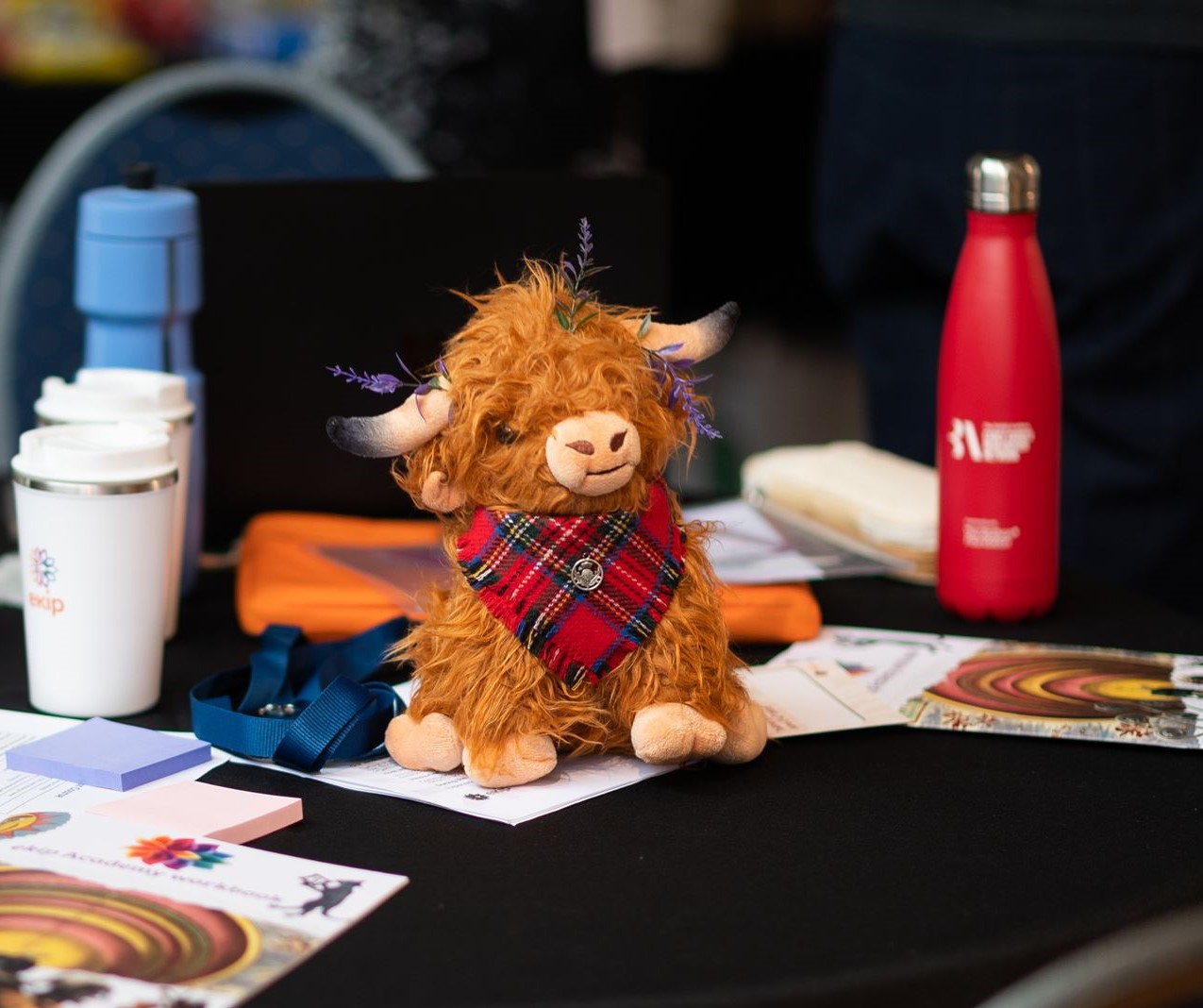
Translators, mediators, connectors: the missing infrastructure of innovation
At the ekip Academy in Tallinn, the South of Scotland team described themselves as the “glue” forming sectors and enabling collaboration, a basic idea that stayed with attendees throughout the event....

July 13, 2026
By Bodil Malmström
Designing Materials for a Regenerative Future
From fungal textiles to living artefacts, researchers and designers are turning to deep tech to rethink what materials can do and who they are for....
July 10, 2026
By Katerina Kalimera
A model that works: what the ekip Academy showed about building innovation ecosystems
There is a particular kind of problem that no single organisation alone can solve, no matter how capable. ...

July 2, 2026
By Mats Benner
Building innovation ecosystems – the case for intermediaries
Recent EU policy debates—captured in the Letta and Draghi reports—have sharpened a familiar concern: Europe needs to better orchestrate its innovation resources. The ambition is clear. ...
