
Welcome to the new innovation policy platform for the cultural and creative industries

- POLICY AREAS
 AI and Cultural and Creative Industries
 New European Bauhaus – CCIs enabling green transition
 Immersive Media
 Crafts-led Innovation
 Platformisation of the Music Industry
 Inclusivity in Video Game Industry
 Cross-Innovation with Performing Arts
 Fashion Transition: Eco-Design for Circularity
 Cultural Heritage Institutions within Open Innovation Ecosystems
 New funding models for creativity and innovation
 Spaces, infrastructures, and ecosystems for CCIs
 Reimagining Deep-Tech
 Digital Commons
 Big Ideas & Perspectives,News
Four things Europe needs to get right on the creative industries, and one that is still missing
Big Ideas & Perspectives,News
Four things Europe needs to get right on the creative industries, and one that is still missing
Four things Europe needs to get right on the creative industries, and one that is still missing
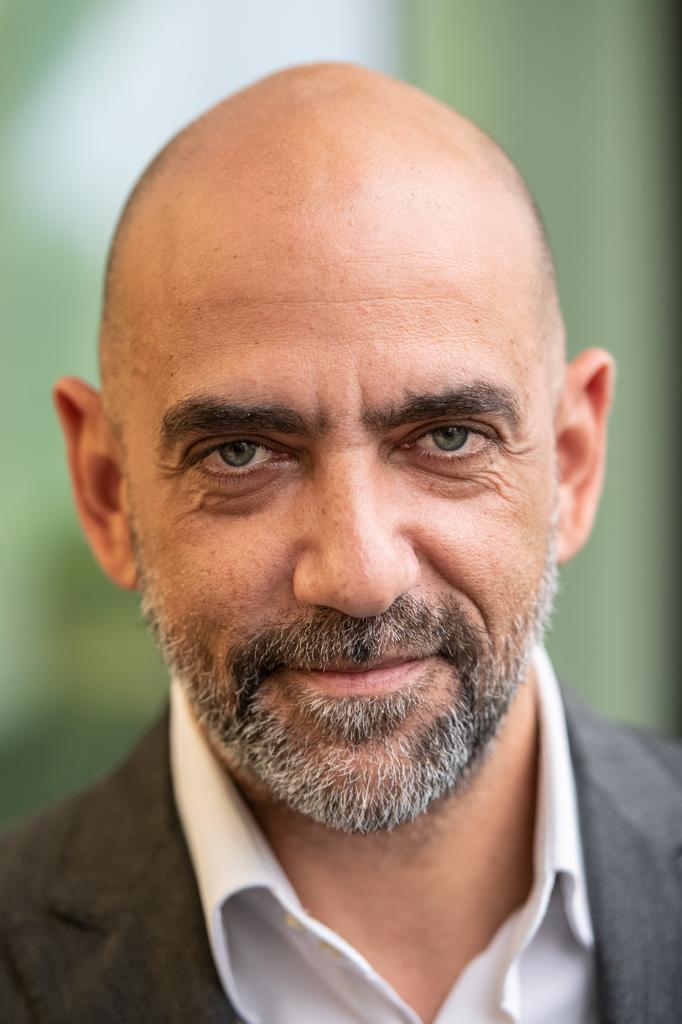
By Michalis Stangos
Europe is losing the technology race, but it still leads on creativity. China used to recruit European engineers. Now it recruits European designers. And that’s where value is moving. Europe’s financing systems have not followed it.
ekip took policymakers, cities and ecosystem actors to Brussels on the 4 th of May to explore this tension: How do we redesign Europe’s innovation ecosystems?
The closing panel was about financing, and it produced the sharpest sentence of the day: “Europe has the creative capability it needs and has built almost no financial architecture capable of investing in it”
I joined the conversation alongside Christian Ehler of the European Parliament, Michiel, Scheffer, President of the Board of the European Innovation Council, and Alberto Mina,, Chief Executive of MIND Milano Innovation District. We took one funding cycle as an, example to prove the whole idea.
It goes like this: a consortium comes together to define roles and set expectations, Once relationships are built, let’s say by the second year, real work starts to happen to, start seeing outcomes by the third year, By then the funding has ended, and the, coordinator moves to the next funded project, Which leaves us with a written and filed, methodology and relationships that fade because no one is getting paid, And a few, years later, we are back at the beginning, A similar newly funded project starts; similar, organisations come together to build it, and public money ends up paying for the same, learning two or three times,
This is the problem that ekip’s fourth recommendation addresses: Shift to innovation portfolio-based financing and investment, with intermediaries as orchestrators.
Move from fragmented project funding to coordinated, multi-stakeholder innovation, portfolios that make transformative and radical innovation possible, This requires both, the right structures, with strategic intermediaries who connect CCIs, academia, industry, and society, and the right instruments: dedicated financing mechanisms with, appropriate risk appetite, blended finance models, and value metrics that treat, creativity-led innovation as the strategic investment it is, Intermediaries and investors, must both be recognised and resourced accordingly “
For that recommendation to work, Europe needs to get four things right. There is also a fifth that nobody has put on the table yet.
Creativity has to run horizontally through FP10 rather than sitting in a silo
The first is a question of where creative capability is placed in the next framework, programme, Give it its own compartment and it will be funded modestly, evaluated, separately and ignored by everyone working in biotech, medtech, climate or advanced, manufacturing, Run it through those fields and it changes how they work, because in, almost every one of them the hard part is not the science but turning the science into, something people will adopt, trust and use.
That’s why cross-sector work needs to start at the beginning of any project, not be, brought at the end as an afterthought, Cross-sector by design, not by cooperation, clauses that nobody enforces, Dissemination matters, but it is not where the value is, created.
A creative studio brought into a health technology consortium at the dissemination stage, will produce a communications campaign; the same studio brought in at the design, stage will change the shape of the product.
Evaluation systems can’t see the value creative work produces
Second, KPIs don’t track behavioural change, improvements in quality of life, or cultural, impact, A project that delivers all three can still look, on paper, like a project that, delivered nothing, The World Intellectual Property Organisation is piloting new, methodologies in this area, which is genuinely useful work, but it is early and it is, nowhere near sufficient on its own.
Many financial institutions can’t see the value creative organisations produce, That, value does not arrive in the form they are trained to look for, and so they can’t measure it.
A studio does research and development, So does a pharmaceutical company or an, engineering firm, Research, experimentation and production in those industries are, separable activities with their own budget lines, their own staff, and their own, documentation, While in a studio, research and development are the same activity, and, experimentation happens inside the production.
Assessed against a framework built for industries where those phases are separate, a, studio doesn’t have the paperwork necessary to prove itself; it appears not to be, innovating at all, The framework has not found an absence of innovation; it has found, an absence of the paperwork it expects innovation to generate, and has drawn the, wrong conclusion from that absence.
European finance does not fund risk, and the sector has adapted to that
The third is the one I find hardest to say diplomatically. European finance does not fund, risk, and the creative industries have internalised that conservatism to the point where, they have stopped submitting bold proposals.
Under funding is one thing, but creatives learning what projects get funded and, moulding their work to a standard is another thing. They stop proposing what they, actually want to attempt. Assessors then see a pipeline of safe proposals and conclude, reasonably on the evidence in front of them, that the sector is not especially ambitious.
A system with a low appetite for risk eventually produces applicants with a low appetite, for risk.
To break the loop, European programmes should value ambitious failures over modest, successes, and say so publicly, rather than reporting only the projects that delivered on, a spreadsheet. Until an evaluation system can tell the difference between a project that, failed because it attempted something difficult and one that failed because it was badly, run, nobody sensible will attempt anything difficult.
Money must be committed to ecosystems rather than to projects
nstead of funding individual projects, I suggest a portfolio split of roughly seventy, twenty and ten: around seventy per cent of capital directed towards proven, approaches, twenty per cent towards relevant innovation, and ten per cent towards, genuinely transformational bets.
At portfolio level, a share of failed bets is not a management failure. It is what a correctly, calibrated risk appetite looks like. Remove the ten per cent and the system can only, finance what it already knows how to evaluate, which is another way of saying that it, can only finance what has already been done somewhere else.
This is also why the portfolio must become the object that is funded, rather than, individual initiatives. Risk only becomes manageable when it is genuinely shared across, the portfolio. And that only happens when funding is committed at the ecosystem level.
The recommendation also explicitly says that intermediaries need to be funded as, orchestrators. Someone must bring different actors together, translate between, research institutions, businesses and creative studios, maintain relationships between, funding rounds, connect existing projects and capabilities and build the next portfolio, from what already exists. This work is highly skilled but mostly invisible, which makes it, harder for traditional reporting systems to capture.
In the current funding model, intermediaries are funded through individual projects, which undermines the very role they are meant to play.
That’s why European creative ecosystems keep having to rebuild relationships, trust, and knowledge from scratch every funding cycle.
Greece has already built part of the instrument
This is not a hypothetical, and the clearest example I know is the one closest to home. Over the past two years Greece has built something that looks a great deal like a sector-specific investment instrument for the creative economy.
Law 5105/2024, Creative Greece, merged the Greek Film Centre and EKOME into a single body, EKKOMED, Creative Greece, with a mandate that runs well beyond cinema: audiovisual production, animation, AR/VR and interactive content, digital games, and the creative sector more widely. Its main instrument is a 40 per cent cash rebate on eligible spend in Greece, capped at 8 million euro per investment plan, with separate schemes for film and television, for animation and interactive content, and for video game development.
Two things in that design deserve to travel to Brussels. The first is that the state treats creative production as an investment to be co-financed rather than a cultural activity to be subsidised, which is precisely the distinction the sector keeps failing to make on its own behalf. The second is that a single scheme covers a drama series, an AR production and a game prototype. The line between creative and technological that European frameworks still police has already been dropped in Greek law, because the market dropped it first.
Creative Greece also runs a Creative Hub as a permanent function, with its own budget for research, networking, technology uptake and international presence, rather than as a work package inside somebody else’s project. That is the orchestrator role the fourth recommendation describes, resourced the way it needs to be resourced, and it is one of the few cases in Europe where that capacity is institutional rather than incidental.
The limits matter just as much, and I would rather name them than use the example as decoration. The rebate is retrospective: it pays out after delivery, once costs have been audited. That is sound public finance, and it also means the instrument works best for those who can already carry the risk, a studio with a balance sheet or a foreign production that arrives fully financed, rather than the small team with an unproven idea. It reimburses eligible cost, which measures activity rather than value created. It backs projects one at a time, so nothing is pooled and no risk is shared. And it deploys grant rather than equity, so when something works the public side captures none of the upside.
None of that is a flaw in the design. It is a national instrument doing what national instruments can do, and Greece is further ahead than most for having built it. The point for the European debate is twofold. A dedicated creative financing vehicle is demonstrably possible, politically and administratively. And the layer no member state can build alone is the one above it: portfolio-level capital, pooled risk, patient equity, and a deliberate appetite for the ten per cent.
What is still missing is an instrument of its own
The four corrections are necessary, but they’re not enough. Each correction works within funding structures designed around other industries. The gap I keep coming back to, and which I have not yet heard named directly, is that Europe needs a “dedicated Creative Investment Framework”: a purpose-built instrument for deploying capital at the creativity frontier. One designed around the realities of creative work.
Creative work needs its own logic; its own approach to risk, its own way of evaluating value, and its own capacity to back ideas that don’t fit neatly into existing categories instead of just inheriting a broader programme’s logic.
A European Creative Investment Framework should start where Creative Greece stops: not a larger rebate, but risk capital deployed at portfolio level, blended public and private, with intermediaries funded as infrastructure and metrics that recognise creativity-led innovation when they meet it.
This matters most for the ten per cent transformational bets, which existing systems are not unwilling but structurally incapable of touching. Trying to adapt existing frameworks is not enough because it results in creative organisations learning to describe their work using the language of manufacturing and technology, and assessors end up judging how well something has been translated into the right language, rather than whether it is actually a good investment.
With the existing systems we risk funding the projects that are best at fitting the system, rather than the projects that could actually change the system.
What is actually at stake
This is not a case for more cultural subsidy. The argument is often misunderstood as the cultural sector simply asking for a larger share of public funding. That’s not the point.
The real question is Europe’s competitiveness. Over the next decade, competitiveness will also depend on who can: design experiences, create meaning, build trust and turn complex technology into something people actually want to use. These are capabilities the cultural and creative industries already have.
Europe has plenty of examples where the technology was there, but adoption wasn’t, and other countries are increasingly looking to Europe for the creative talent that can bridge technology and people.
The issue is not “more money for culture.” Our ask is about building a financial system that can invest in creative capability as part of Europe’s innovation capacity which requires a different funding architecture:
-
Commit capital to portfolios, not isolated projects.
-
Fund intermediaries as infrastructure, not overhead.
-
Set the risk appetite deliberately, rather than letting risk aversion decide by default.
-
Develop metrics that can actually recognise creativity-led innovation.
-
Let national instruments and European capital do different jobs: member states de-risk production, Europe funds the portfolio above them.
Without that architecture, the same problem will keep repeating. Europe will keep paying to build valuable capacity. Funding will end. Relationships and knowledge will disperse. And the next programme will pay to rebuild them again.
The conversation now needs to move from identifying the problem to designing the solution. What would a financial framework built specifically for creativity-led innovation actually look like? And what would it take to build it? Greece has built one floor of it. The rest is a European decision.
I would be interested to hear from others working at this intersection, and particularly from anyone who has thought seriously about what building such a framework would require.
Latest ekip News and Updates
September 17, 2026
By Michalis Stangos
Four things Europe needs to get right on the creative industries, and one that is still missing
Europe is losing the technology race, but it still leads on creativity. ...

September 3, 2026
By Lena Holmberg, Lund University
AI and CCI: Shaping Europe’s Next Step
Across Europe, cultural and creative actors are asking a similar question: how can artificial intelligence be shaped in ways that strengthen creativity, cultural diversity and democratic innovation, r...

July 16, 2026
By Katerina Kalimera
Translators, mediators, connectors: the missing infrastructure of innovation
At the ekip Academy in Tallinn, the South of Scotland team described themselves as the “glue” forming sectors and enabling collaboration, a basic idea that stayed with attendees throughout the event....

July 13, 2026
By Bodil Malmström
Designing Materials for a Regenerative Future
From fungal textiles to living artefacts, researchers and designers are turning to deep tech to rethink what materials can do and who they are for....
