
Welcome to the new innovation policy platform for the cultural and creative industries

- POLICY AREAS
 AI and Cultural and Creative Industries
 New European Bauhaus – CCIs enabling green transition
 Immersive Media
 Crafts-led Innovation
 Platformisation of the Music Industry
 Inclusivity in Video Game Industry
 Cross-Innovation with Performing Arts
 Fashion Transition: Eco-Design for Circularity
 Cultural Heritage Institutions within Open Innovation Ecosystems
 New funding models for creativity and innovation
 Spaces, infrastructures, and ecosystems for CCIs
 Reimagining Deep-Tech
 Digital Commons
 News,Policy Spotlights
Innovation reshapes cultural and creative industries, opening new funding and business models
News,Policy Spotlights
Innovation reshapes cultural and creative industries, opening new funding and business models
Innovation reshapes cultural and creative industries, opening new funding and business models
By Bodil Malmström

Cultural and innovation policy are increasingly interconnected in shaping the future of creative industries. While cultural policy sustains the conditions for cultural production, innovation policy focuses on scalable solutions and economic impact. But the two depend on each other: cultural actors need stable core conditions to engage in innovation, which in turn can help develop new models and revenue streams when systems are aligned.
”Innovation policy is driven by the goal of generating scalable, often technology-based solutions with clear economic impact. It tends to focus less on who is involved and more on what is produced and whether it can be developed into something commercially viable”, says Charlotte Lorentz Hjorth coordinator for ekip.
Cultural policy, by contrast, is less about scaling products and services, and more about sustaining the ecosystems that allow cultural expression to exist. It raises fundamental questions about access, participation, and influence over cultural and social values.
”Cultural policy is largely about sustaining the infrastructure that supports cultural productions, and that’s where the ‘who’ becomes crucial”, says Charlotte Lorentz Hjorth.
Fragmented system
Sylvia Amann, founder of the Austrian consultancy inforelais and a veteran cultural policy strategist working across Europe, Africa, and beyond, argues that the problem is not simply financial. It is structural — and increasingly ideological. Intermediary actors, funding models, experimentation are being asked to behave more like markets, while still claiming to serve public good.

Sylvia Amann, founder of the Austrian consultancy inforelais and a veteran cultural policy strategist
“I’m a radically future-oriented person,” she says. “If you know where you want to go in five years, you can define what needs to happen now.”
It is this long-term thinking—paired with what she calls “true devotion”—that shapes her view of Europe’s creative economy: a sector rich in potential but still struggling to organise itself effectively.
That strategic framing, she explains, is not abstract planning but survival logic in a fragmented system.
“We are constantly adapting to change instead of shaping frameworks for change.”
A bridge
Charlotte Lorentz Hjorth describes the bridge between cultural production and innovation as essential but often missing.
“If the system for financing culture doesn’t work, then we can’t expect those actors to engage in innovation. Without a normal business, they can’t develop things that scale the new solutions affecting the cultural productions of tomorrow.”
Innovation, she notes, is about scaling solutions—not funding individual works—but it depends on a stable base.
“You need a functioning core business first. Then a surplus to enter development.”
When aligned, innovation can strengthen cultural production in return.
Critical role of intermediaries
For Sylvia Amann, intermediary actors — cultural incubators, innovation hubs, funding agencies, and networks — are not auxiliary structures. They are the mechanism that makes cultural economies function.
“This is absolutely crucial,” she says. “Without intermediaries, it becomes extremely complex for individual entrepreneurs to find their way — to access information, to understand opportunities, or to organise knowledge in a meaningful way.”
She draws a sharp comparison between Europe and parts of Africa, where intermediary ecosystems are still developing.
“In Africa, there is a very strong dynamic, but fewer intermediaries compared to Europe. In Europe, we often forget that we built these systems over decades.”
That forgetting, she warns, creates fragility.
“We take intermediaries for granted. And when budgets are cut, there is often almost no reaction. That tells you something about how invisible their value has become.”
For Sylvia Amann, intermediaries also carry a political function that individual artists or small organisations cannot realistically fulfil.
“It is not the role of a single entrepreneur to stand in front of parliament and try to change systems. They are trying to survive. Intermediaries exist exactly for that reason, to aggregate, to represent, to connect levels.”
But she also identifies a structural weakness: fragmentation across governance levels.
“We have intermediaries at local, national, and EU level, but they are not working as a system. They are often tied to their own political sphere instead of functioning as a coordinated ecosystem.”
Undermining the trust
One of Sylvia Amann’s strongest critiques concerns how “experimentation” is framed in funding debates.
“There is sometimes a nostalgia in our sector,” she says. “We confuse weak project management with artistic freedom and call it experimentation.”
That confusion, she argues, undermines trust between actors within CCI and funders — especially in cross-sector collaborations such as regional development or EU-funded projects.
“Partners from outside the CCI sector are often very open to collaboration,” she explains, “but extremely frustrated by non-professional project management.”
The implication is not disciplinary, but practical:
“Experimentation belongs in the artistic output. In management, we need professionalism to be credible partners.”
She contrasts this with startup ecosystems, where risk is structurally incentivised.
“In startups, risk is accepted because there is a promise of return — economic, social, reputational. In culture, risk is often seen as disruption without compensation.”
Innovation a key factor
Innovation is more than a driver of technological advancement—it is also becoming a key force reshaping how cultural and creative industries operate, survive, and grow in an increasingly uncertain environment. It could be the missing link in helping CCI sectors move beyond short-term survival strategies. When applied to CCI, it can enable experimentation with new revenue streams, hybrid organisational models, and cross-sector collaboration.
” Innovation has the potential to fundamentally transform how creative sectors function, opening the door to entirely new business models rather than simply improving existing ones”, says Charlotte Lorentz Hjorth.
She describes the sector’s ability to combine funding streams as unique.
“You can have both cultural and innovation money if you are in this sector,” she explains. “If you run a cultural project and find opportunities to scale it, then you can access development funds as well.”
Unlike most industries, where companies typically only access innovation funding, cultural actors can move between production support and development funding.
“Normal companies can only get innovation money — they don’t get funding for business development or production. Volvo doesn’t get money to make cars, only for new developments.”
But she stresses that the advantage only works if systems are aligned: “It’s a superpower… but the systems have to work together.”
Lacking clarity
Sylvia Amann’s final argument is not about funding instruments alone, but about systemic orientation.
“We will not run behind crises and repair the future,” she says. “We need to build it in a structured way.”
That requires a shift in mindset across policy, intermediaries, and cultural actors alike: from short-term optimisation to long-term design.
“Sustainability only works if I know what is ahead of me. That requires foresight, governance systems, and ecosystemic thinking.”
She returns, again, to the role of intermediaries — not as support structures, but as stabilisers of complexity. As facilitators of cross-sectoral debates to co-design common visions.
“We need common effort. We need ecosystemic approaches. We need governance systems that understand interdependence.”
And finally, she reframes the core challenge of funding itself:
“We are not per se lacking money in our world. We are lacking clarity about what kind of future we want to build, the role of CCI in and with our 21st century societies — and the courage to design systems that actually support it. A deeply political endeavour.”
Open Innovation
As a final reflection on ekip’s work, Charlotte Lorentz Hjorth highlights how the innovation policy recommendations developed throughout the project address the fundamental building blocks of ecosystems. She also points to how these structures can be adjusted and adapted to better support innovation together with the Cultural and Creative Industries (CCI).
“Our work has been based on the principles of Open Innovation — not only sharing knowledge between disciplines, but also sharing results and revenue in a structured way,” says Charlotte Lorentz Hjorth. “From ekip, we hope this can help fulfil Sylvia´s vision of ecosystems that function better on a systemic level and support a future where the CCIs become a central part of societal development.”
Latest ekip News and Updates
October 1, 2026
Europe has the pieces. In Eindhoven, ekip shows how to connect them.
On 23 October, during Dutch Design Week, three years of European work on the cultural and creative industries changes hands ...

September 17, 2026
By Michalis Stangos
Four things Europe needs to get right on the creative industries, and one that is still missing
Europe is losing the technology race, but it still leads on creativity. ...
September 3, 2026
By Lena Holmberg, Lund University
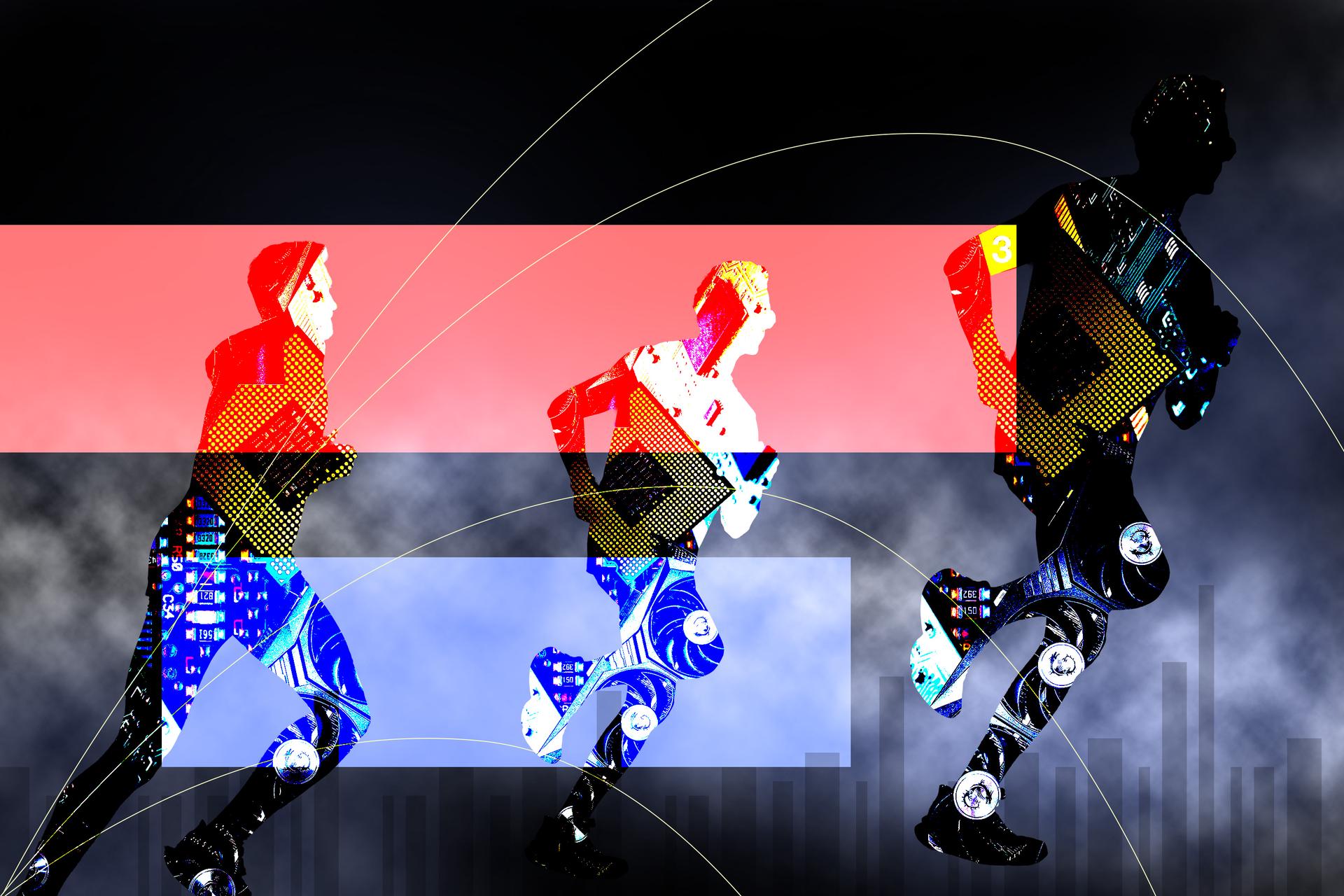
AI and CCI: Shaping Europe’s Next Step
Across Europe, cultural and creative actors are asking a similar question: how can artificial intelligence be shaped in ways that strengthen creativity, cultural diversity and democratic innovation, r...
July 16, 2026
By Katerina Kalimera
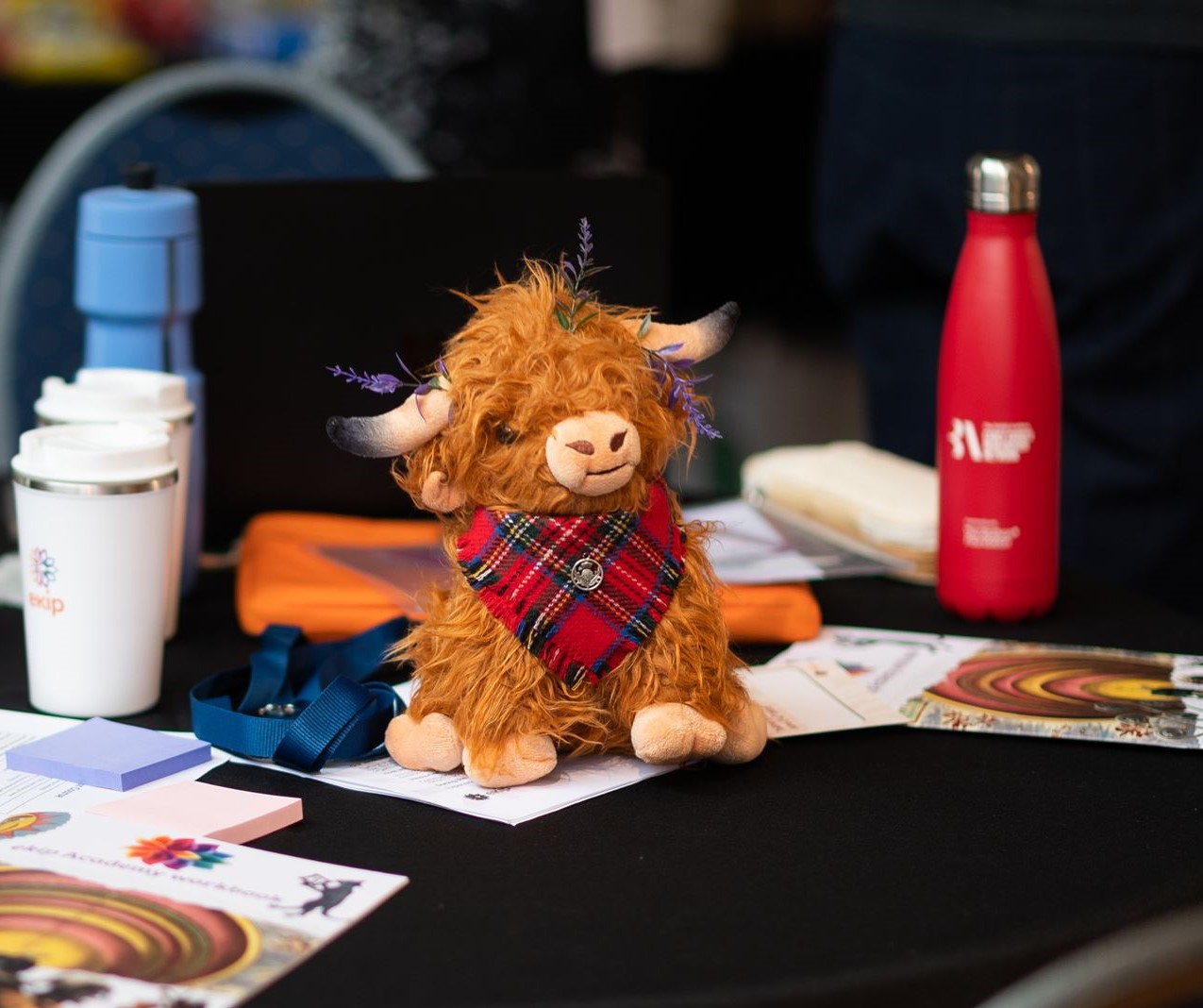
Translators, mediators, connectors: the missing infrastructure of innovation
At the ekip Academy in Tallinn, the South of Scotland team described themselves as the “glue” forming sectors and enabling collaboration, a basic idea that stayed with attendees throughout the event....
